1
Sign in on whatever is to hand
Phone, tablet or computer. It is the same Scribblelark on each, laid out to fit the screen. Sign in with your email or mobile and a one-time code. There is no password to remember.
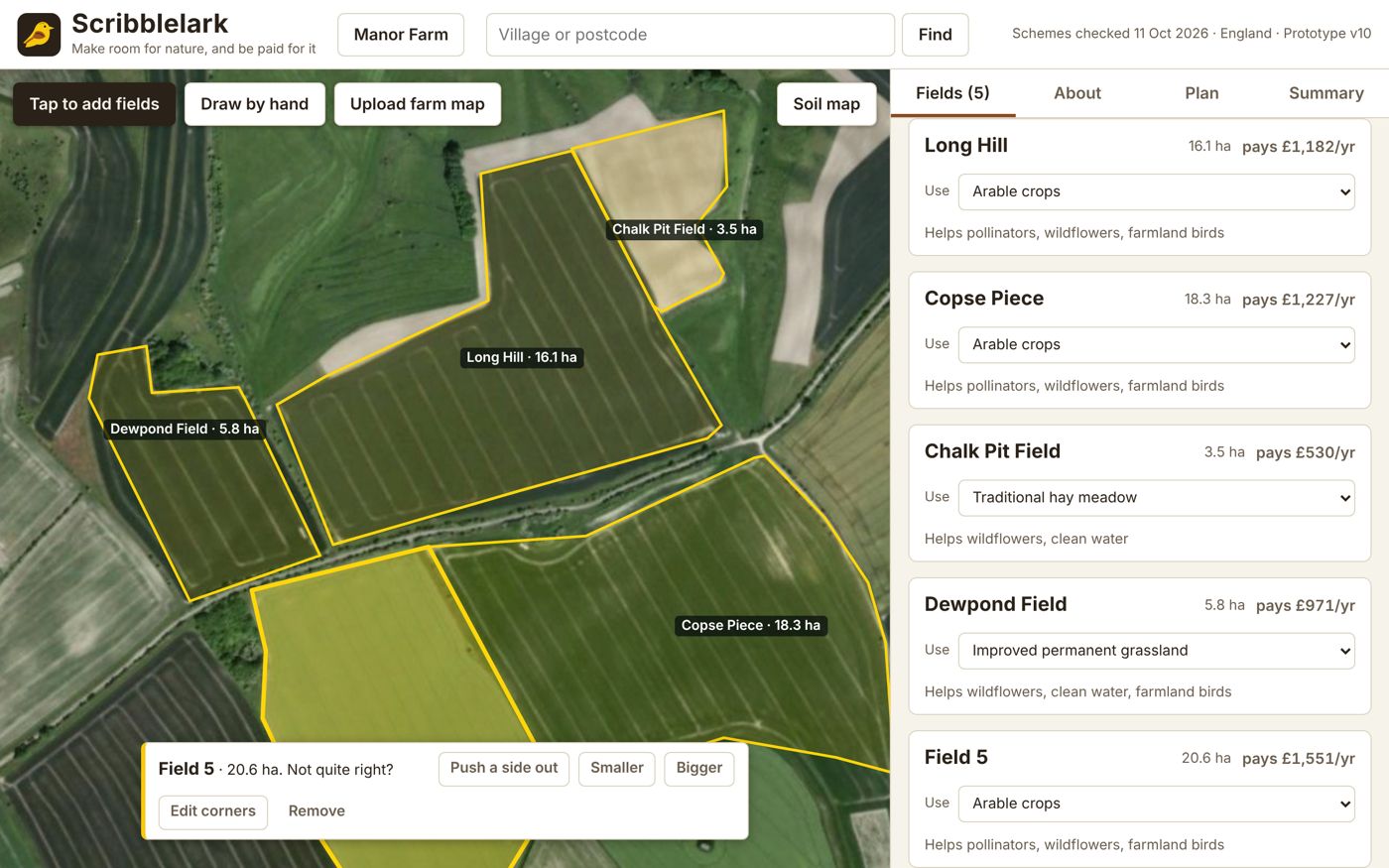
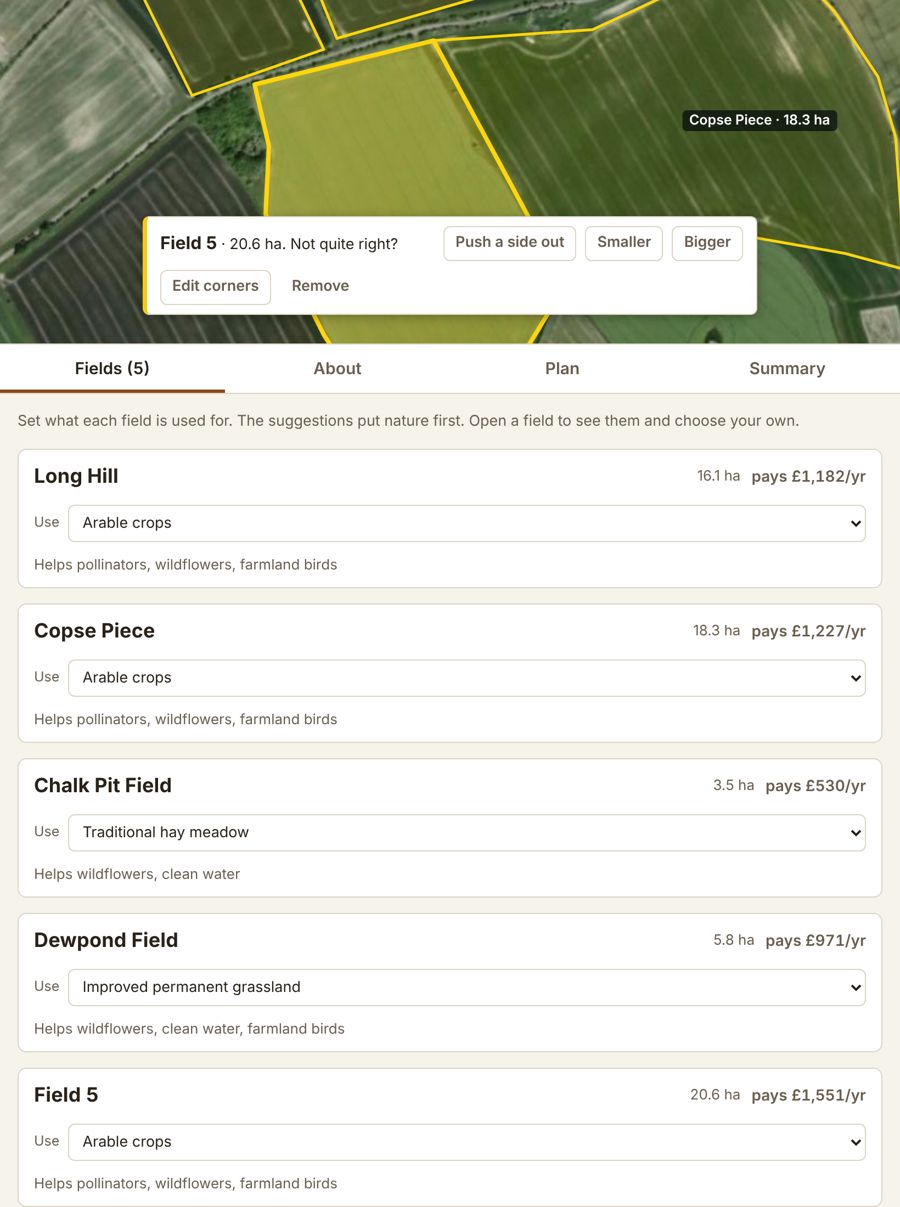
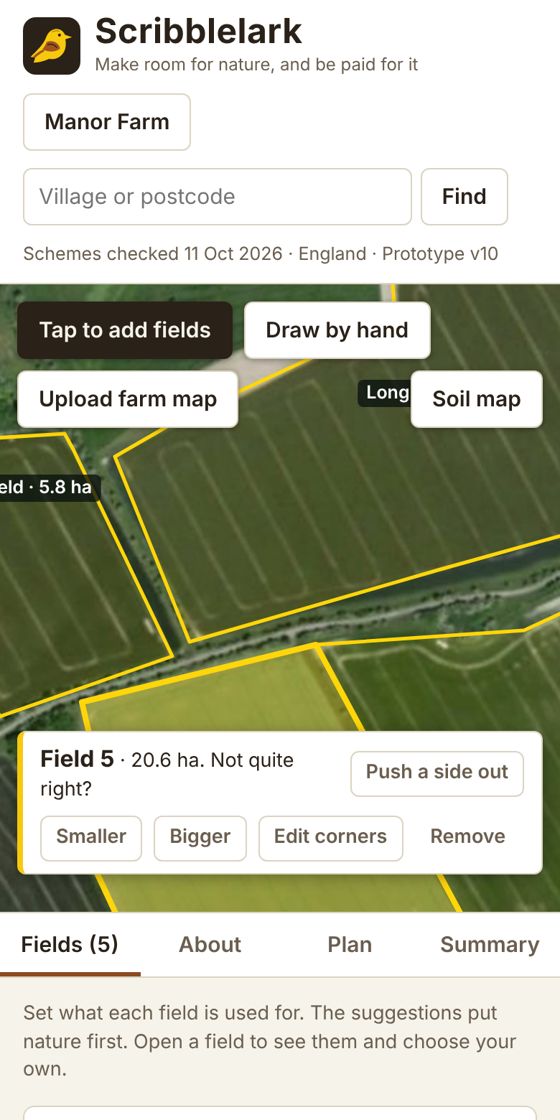
ComputerTabletPhone
Scribble round your fields. See what could live there.
Draw your land on an aerial photo. Scribblelark shows farmers and landowners in England where hedgerows, ponds, flowers and birds could come back, and which government schemes will pay towards it.
7 days free. Then £20 a month or £199 a year. Register now for up to half price.
Tap a field.
We find the hedge.
Keep tapping
for the rest.
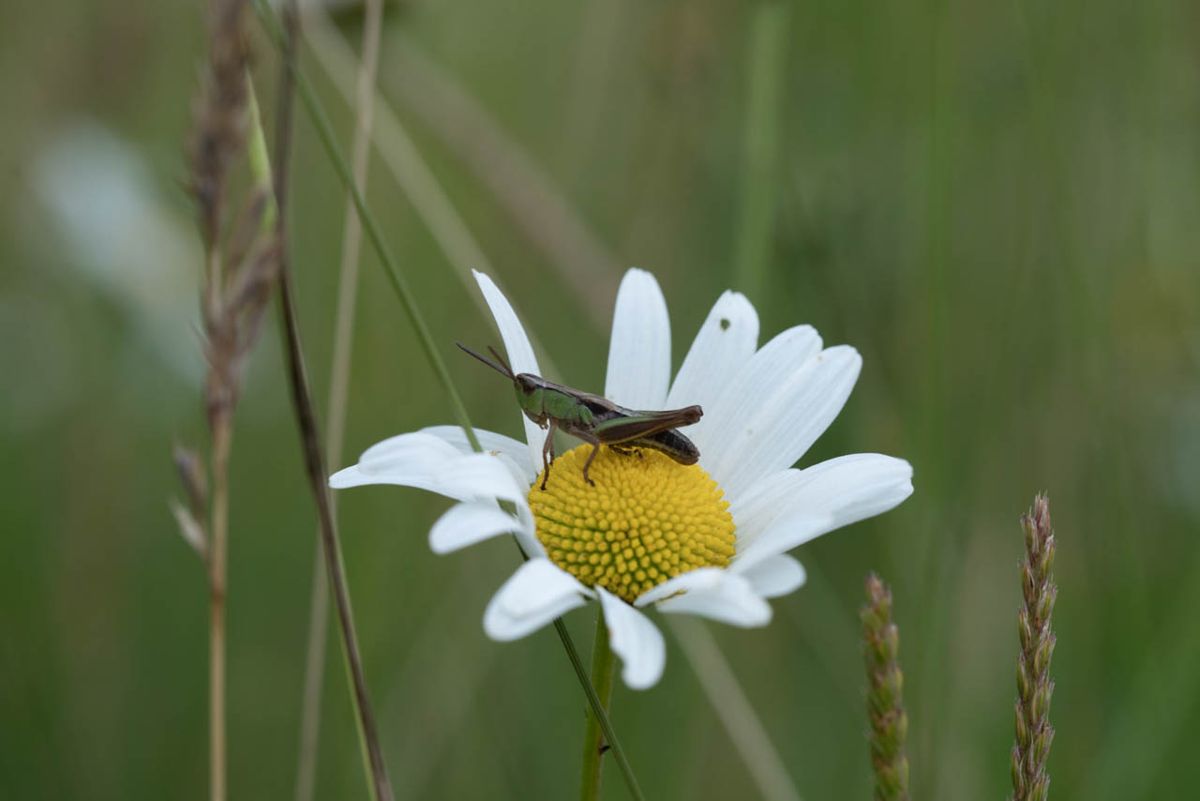
What it is
Mark your fields on an aerial photo. Each one is checked against public data: land grade, slope, protected landscapes, priority habitats, chalk streams and agreements already in place.
Suggestions lead with what does most for wildlife. The payment covers the work and the income you give up. This is not a profit calculator.
Farmers, landowners who let their ground, smallholders, estates. Several schemes are open to any landowner, not just farmers, and Scribblelark tells you which.
How it works
No forms to study first. Start on the sofa with a phone and finish at the desk if you like. Your land is saved to your account, whether it is a farm, an estate or a few paddocks.
Phone, tablet or computer. It is the same Scribblelark on each, laid out to fit the screen. Sign in with your email or mobile and a one-time code. There is no password to remember.
Tap inside a field. Scribblelark runs the boundary out to the hedge, track or road, and lines it up with the fields next door.
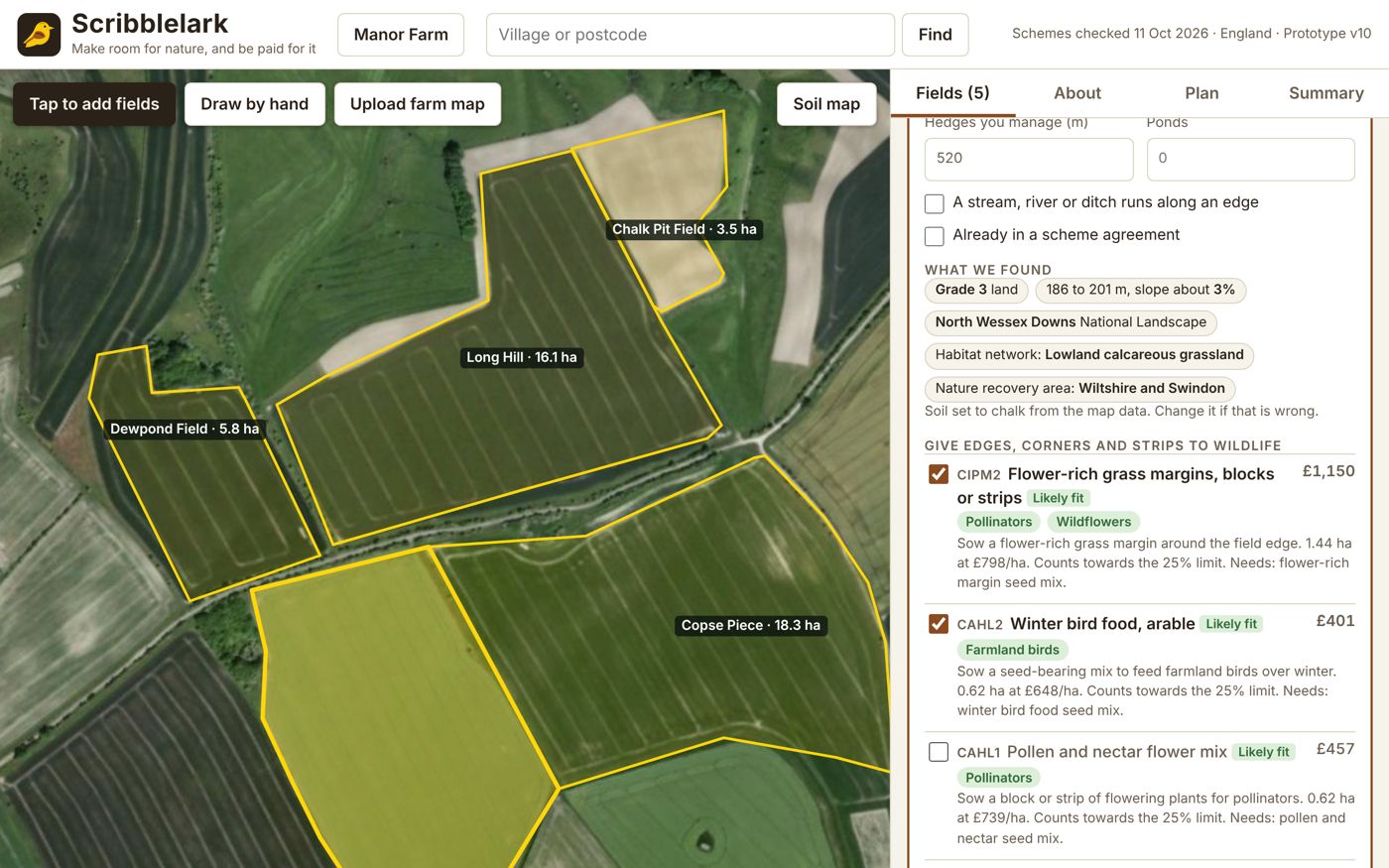
Arable, a hay meadow, horse paddocks, parkland, scrub, a pond. Pick from the list. Scribblelark suggests actions for that field and says what each helps: pollinators, farmland birds, soil life, clean water.
Tick and untick to make the plan your own.
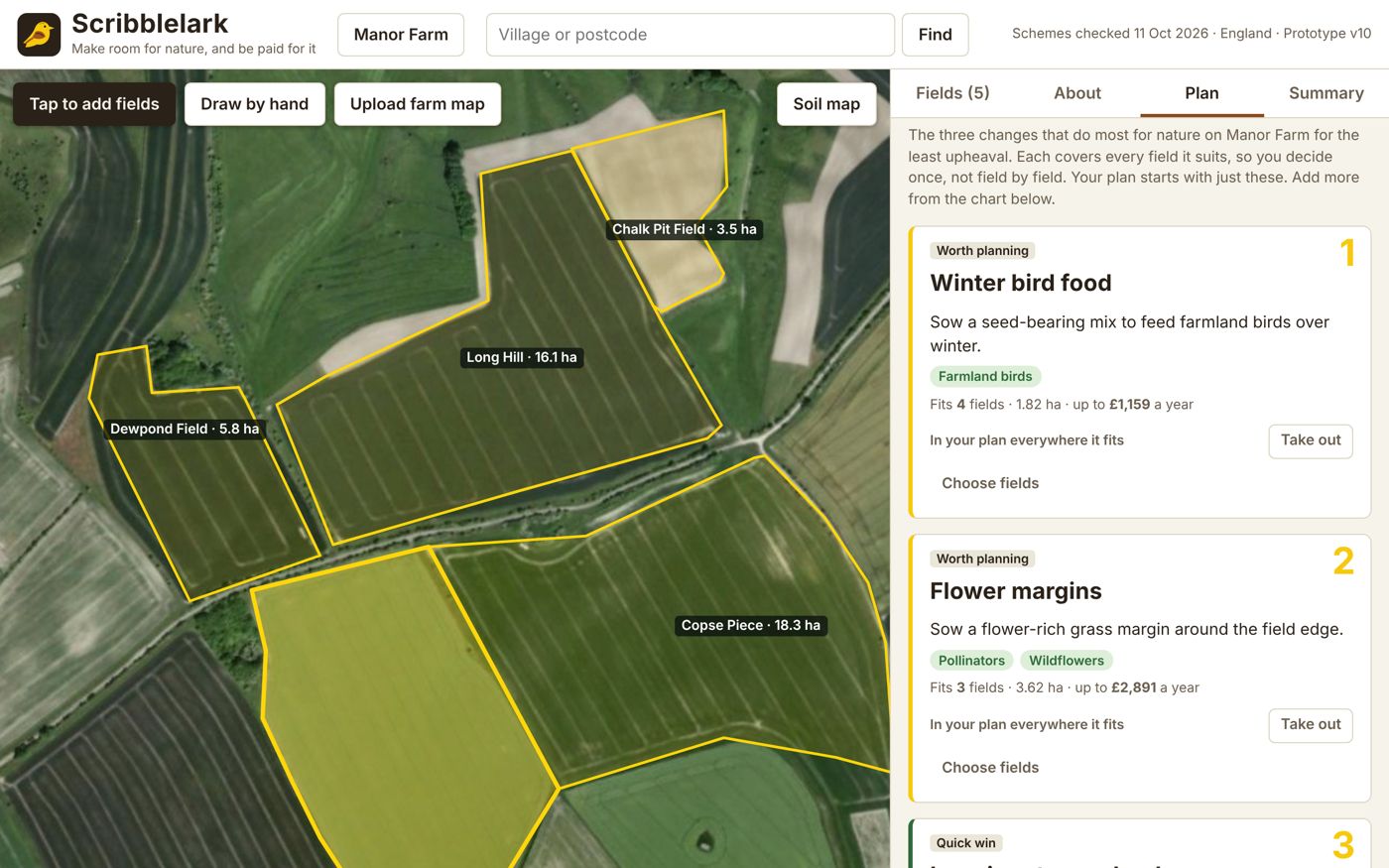
No wall of options. Scribblelark picks the three changes that do most for nature on your land for the least upheaval, and applies each to every field it suits, so you decide once.
Everything else sits on one chart: quick wins, things worth planning, easy extras and ones to think twice about. Then mark each scheme Interested, Already claim or Not for me.
Screens show an example farm. Figures are estimates at published 2026 rates. Map images © 2026 Esri, Maxar, Earthstar Geographics, used under license.
The whole picture
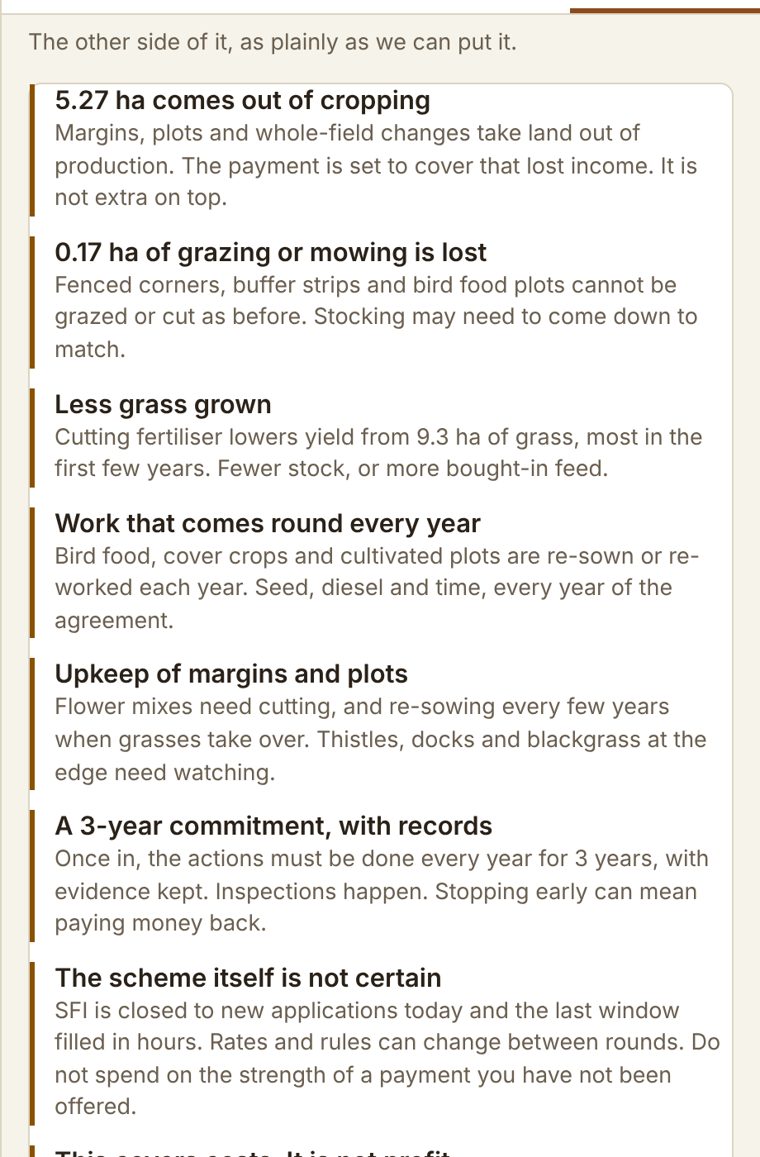
Every holding gets a summary of what would happen if you did all of it: what you could expect to see, year by year, which wildlife it helps, what you would be paid, and what you would give up. We would sooner you knew.
Scribblelark does not submit applications. You apply through the Rural Payments service or the scheme itself, with a prepared sheet from us. Payments shown are estimates from published rates and the areas you mark. It covers public schemes in England today. Wales and Scotland are planned next.
For members
Finding the scheme is the start. Membership is built to help with what comes after. Everything in these three columns is planned. None of it is live yet.
Government schemes are not the only ones paying. We cover public schemes first because the rules are published and the same for everyone. Private funding is next.
Partner offers never change what Scribblelark suggests. Actions are chosen for what they do for nature. If a supplier pays us for a referral, we will say so. Private schemes will be shown with the same plain account of what they tie you into.
Pricing
Schemes open, close and change their rules through the year. Membership keeps your plan current, sends a monthly update, and tells you straight away when a scheme you marked Interested moves.
Half price for your first 6 months on monthly membership, or 25% off yearly membership for as long as you stay. That is £149.25 a year in place of £199. Half price monthly is £10 a month for your first 6 months.
Everything, for up to 3 holdings. Stop when you like.
Everything, for up to 3 holdings. Works out at £16.58 a month.
Who we are
Scribble lark: an old country name for the yellowhammer
The yellowhammer is one of Britain's brightest birds. The cock is lemon-yellow and sings from the top of a hedge all summer. Its eggs are covered in fine dark squiggles, as if someone had tested a pen on them. Country people called it the scribble lark.
It was once on every farm. Since the 1960s more than two thirds have gone. Autumn sowing took away the winter stubbles it fed on, hedges and rough margins were lost, and by late winter there is too little seed left to see it through to spring.
What it needs is not complicated: a thick hedge, a rough margin and seed in winter. Those are the things the schemes pay for. Scribblelark was started to give birds like this more places to live, by making it easy for the people who hold the land to say yes.
Working on Helen Browning's organic farm at Bishopstone, under the Wiltshire downs, showed James what farmland can hold when it is given the room: corn buntings, yellowhammers, linnets, skylarks, barn owls and hares.
Founder
Wildlife photographer and digital delivery lead
I've spent years on a farm where the hedges are left thick and the margins are left for wildlife, and I've watched corn buntings and yellowhammers come back to it. Most landowners I meet would do the same tomorrow. What stops them isn't will. It's knowing where the money is, and finding a way through schemes and applications that are far more complicated than they need to be. Scribblelark is my way of making the right thing the easy thing.
James Andrews, founder
Since 2018 James has run ProHides, the wildlife photography hides on Helen Browning's organic farm at Bishopstone. He has a BSc in Marine and Freshwater Biology and has watched birds since childhood.
He is also Head of Delivery at TBSCG, a digital consultancy, where he leads the teams building content and AI platforms for large organisations. Before that he built the Jessops training academy. Scribblelark is where the two worlds meet.
Register your interest
Leave an email address, a mobile number, or both. We will contact you once, when sign-up opens.